"When
combined with information and communication technologies,
microcredit can unleash new opportunities for the world's
poorest entrepreneurs and thereby revitalize the village
economies they serve."
-- Madeleine K. Albright and John Doerr
|
*
"Founded
on the principles of private initiative, entrepreneurship
and self-employment, underpinned by the values of
democracy, equality and solidarity, the co-operative
movement can help pave the way to a more just and
inclusive economic order"
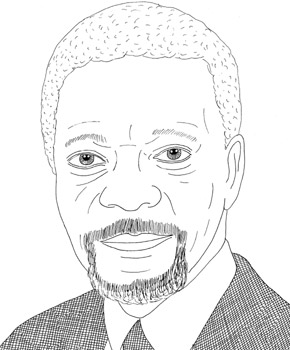
-- Kofi
Annan
|
 |
"What
business entrepreneurs are to the economy, social entrepreneurs
are to social change. They are the driven, creative individuals
who question the status quo, exploit new opportunities,
refuse to give up, and remake the world for the better."
-- David Bornstein
According
to the management expert Peter F. Drucker, the term "entrepreneur"
(from the French, meaning "one who takes into hand") was
introduced two centuries ago by the French economist Jean-Baptiste
Say to characterize a special economic actor--not someone
who simply opens a business, but someone who "shifts economic
resources out of an area of lower and into an area of
higher productivity and greater yield." The twentieth-century
growth economist Joseph A. Schumpeter characterized the
entrepreneur as the source of the "creative destruction"
necessary for major economic advances.
-- David Bornstein
Social
entrepreneurs have existed throughout history. St. Francis
of Assisi, the founder of the Franciscan Order, would
qualify as a social entrepreneur -- having built multiple
organizations that advanced pattern changes in his "field."
Similarly, Florence Nightingale created the first professional
school for nurses and established standards for hygiene
and hospital care that have shaped norms worldwide. What
is different today is that social entrepreneurship is
developing into a mainstream vocation, not only in the
United States, Canada, and Europe, but increasingly in
Asia, Africa, and Latin America. In fact, the rise of
social entrepreneurship represents the leading edge of
a remarkable development that has occurred across the
world over the past three decades: the emergence of millions
of new citizen organizations.
-- David Bornstein
"Entrepreneurs
have a mind-set that sees the possibilities rather than
the problems created by change."
-- J Gregory Dees
"Social
entrepreneurship describes a set of behaviors that are
exceptional. These behaviors should be encouraged and
rewarded in those who have the capabilities and temperament
for this kind of work. We could use many more of them.
Should everyone aspire to be a social entrepreneur? No.
Not every social sector leader is well suited to being
entrepreneurial. The same is true in business. Not every
business leader is an entrepreneur in the sense that Say,
Schumpeter, Drucker, and Stevenson had in mind. While
we might wish for more entrepreneurial behavior in both
sectors, society has a need for different leadership types
and styles. Social entrepreneurs are one special breed
of leader, and they should be recognized as such. This
definition preserves their distinctive status and assures
that social entrepreneurship is not treated lightly. We
need social entrepreneurs to help us find new avenues
toward social improvement as we enter the next century."
-- J Gregory Dees
 |
"Change starts when someone sees the next step."
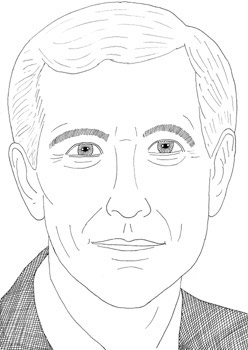
-- William
Drayton
*
"Social
entrepreneurs are not content just to give a fish
or teach how to fish. They will not rest until they
have revolutionized the fishing industry."
-- Bill
Drayton
|
The
core psychology of a social entrepreneur is someone who
cannot come to rest, in a very deep sense, until he or
she has changed the pattern in an area of social concern
all across society. Social entrepreneurs are married to
a vision of, for example, a better way of helping young
people grow up or of delivering global healthcare. They
simply will not stop because they cannot be happy until
their vision becomes the new pattern. They will persist
for decades. And they are as realistic as they are visionary.
As a result, they are very good listeners. They have to
hear if something isn’t working; and, whenever they do,
they just keep changing the idea and/or the environment
until their idea works. They are intensely concerned with
the how-to’s: How do I get from here to there? How do
I solve this problem? How do these pieces fit together?
-- Bill
Drayton
The
biggest problem is getting beyond the “you can’t” syndrome.
The moment you figure that out, you’re on your way to
flying. Anyone who cannot see problems around him or herself
is utterly blind. All the problems sitting there are an
invitation for you to be creative, make use of your skills
and resources and find a solution. Of course you can do
it. It doesn’t require brilliance. It’s just giving yourself
permission and then being persistent. Persistent in seeing
the problem or opportunity and persistent in thinking
about it until you have come up with some interesting
ideas that might change the pattern. It’s really a mindset,
not anything in the objective world — that is the problem.
-- Bill
Drayton
What
is the most powerful lever you can imagine? A big idea,
but only if it’s in the hands of a truly outstanding entrepreneur.
It starts with the person and the idea, and then grows
to the institution. All three are intertwined.
-- Bill
Drayton
|
|
*
"What
we need is an entrepreneurial society in which innovation
and entrepreneurship are normal, steady and continuous."
--
Peter
F. Drucker
"the
entrepreneur always searches for change, responds
to it, and exploits it as an opportunity."
-- Peter
F. Drucker
|
|
If
they [companies] believe they are in business to
serve people, to help solve problems, to use and
employ the ingenuity of their workers to improve
the lives of people around them by learning from
the nature that gives us life, we have a chance.
~ Paul
Hawken
|
 |
“Social
entrepreneurship needs to become a mass activity,
not just the domain of inspirational mavericks ...
Entrepreneurship usually comes from teams, not heroic
individuals. Social entrepreneurs thrive on interdependence,
learning and borrowing resources from the public and
private sectors.”
-- Charles Leadbeater
"Microloans
enable the poor to lift themselves out of poverty
through entrepreneurship."
-- Pierre Omidyar
|
*
A
social entrepreneur is somebody who knows how
to make an idea reality, and one of the great
ideas of our time is pluralism. Can people from
different backgrounds live together in mutual
peace and loyalty? And what we need is a generation
of young social entrepreneurs who know how to
make that great idea reality in an historical
moment where religious extremists are, frankly,
making their idea reality.
-- Eboo
Patel
|
 |
|
|
*
"Fair
Trade is a market-based, entrepreneurial response
to business as usual: it helps third-word farmers
developing direct market access as well as the
organizational and management capacity to add
value to their products and take them directly
to the global market. Direct trade, a fair price,
access to capital and local capacity-building,
which are the core strategies of this model,
have been successfully building farmers' incomes
and self-reliance for more than 50 years."
~ Paul
Rice
|
"The
entrepreneur shifts economic resources out of an area
of lower and into an area of higher productivity and
greater yield."
-- Jean-Baptiste Say
"the
function of entrepreneurs is to reform or revolutionize
the pattern of production... by exploiting an invention
or, more generally, an untried technological possibility
for producing a new commodity or producing an old
one in a new way, by opening up a new source of supply
of materials or a new outlet for products, by reorganizing
an industry and so on."
-- Joseph Schumpeter
|
|
*
"The
world must become aware of the fantastic transformational
power of social entrepreneurship and the Foundation
will work as a catalyst in this effort."
~ Klaus
Schwab
|
|
*
Social
entrepreneurs come from all levels of society
and from communities in nearly every country
of the world. They all share the same underlying
drive and passion to see their ideas through.
Many of them have had a huge effect on the world,
yet most people have not even heard of them
– a trend we hope to change!
-- Jeffrey
Skoll
a
little bit of good can turn into a whole lot
of good when fueled by the commitment of a social
entrepreneur
-- Jeffrey
Skoll
|
 |
Not everyone can be Gandhi, but each of us has the
power to make sure our own lives count – and it’s
those millions of lives that will ultimately build
a better world.
-- Jeffrey
Skoll
The
developed world has a vast, under-utilized asset that
is not being leveraged to its best advantage: idealistic
people who want to make the world a better place.
For most of a century, idealistic people have been
encouraged to use anger, protest, lobbying, and legal
action in order to make the world a better place.
While most certainly some of these behaviors and activities
were necessary, we have reached the point at which
the social benefit of such behaviors is decreasing.
We have reached the point at which creation, rather
than attack, ought to be the first obligation of reformers.
The social entrepreneurship movement is the first
tip of this iceberg. We want to create a world in
which all idealists realize that the creation of new
enterprises is the most powerful way to make positive
change in the world. If all the energy that is currently
invested in zero-sum political conflict was gradually
transferred to the committed creation of sustainable
enterprises, the cumulative impact on behalf of the
good would be extraordinary.
-- Michael Strong
|
*
“Entrepreneurs
are risk takers, willing to roll the dice with
their money or reputations on the line in support
of an idea or enterprise.”
-- Victoria
Woodhull
|
 |
What's
YOUR BetterWorld Path: SOCIAL
ENTREPRENEURS